
Harry Kappen: “It’s hard to say to what extent my music has evolved. It has perhaps become a bit more mature. More personal”
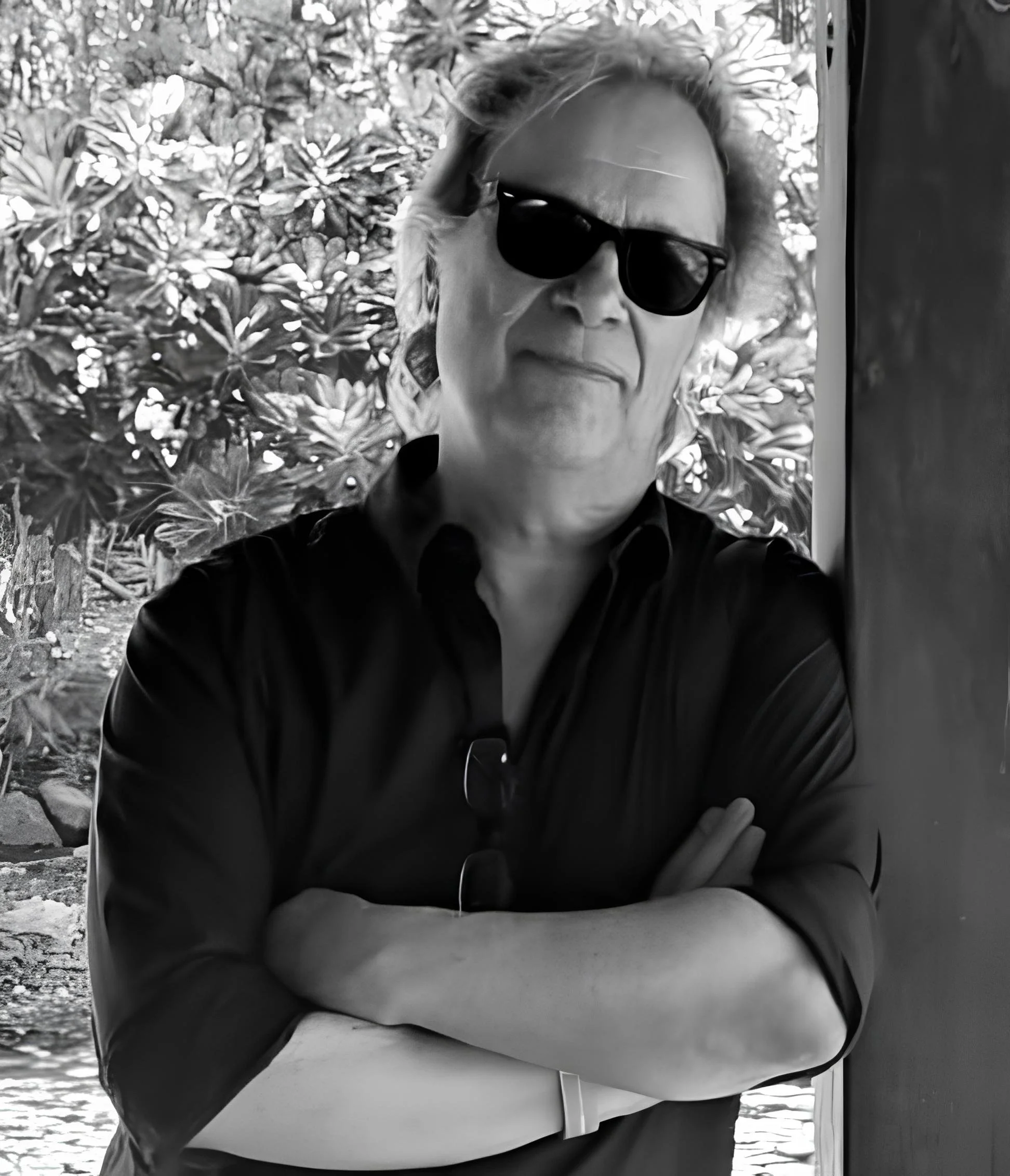
Harry Kappen is an acclaimed singer/songwriter and music therapist who recently decided to pack his bags and relocate from the Netherlands to Mexico. Now, I first discovered Harry's music in early 2024 with tunes like One life and "Cool Down", and to be honest, that's all it took to turn me into a fan.
Since then, Harry has released three full-length albums, with After The Crossing being the most recent. And so, with all that said, I decided it was time to reach out to Harry and see whether he'd be up for an interview. Thankfully, he was game.
Chatting about how moving to Mexico shaped his latest record, why growing up in the vibrant city of Groningen was incredibly motivating, and where his true priorities lie, please welcome the legendary Harry Kappen!
Hey Harry - welcome aboard! I'm so excited to introduce you to our ever-growing audience!
Now, for the unfortunate souls who haven't discovered your music yet, what are they missing out on? How would you describe your sound?
That’s a tough question right off the bat because it’s not something I really dwell on. I think there are many influences at play—particularly the rock music of the late 20th century, simply because that’s what I grew up with. But my music is quite eclectic; I love classical, folk, hard rock, funk and atmospheric music. I love melodies. I do whatever I feel like doing and let the music shape my lyrics. The result inevitably creates a certain 'sound,' though I think the unifying factor is my voice.
After The Crossing is such a special album - and it's really become a part of my regular rotation over the last few weeks.
As the first full-length record you've released since moving from the Netherlands to Mexico, how much did your new surroundings shape the songs that ultimately found their way onto the album?
The songs had already largely taken on their final instrumental form by the time I arrived in Mexico. Some lyrics—such as those for Distant Shore—were indeed influenced by the move and written later. However, a song like No Delays was written before the move, yet it is deeply connected to my outlook on the future, what was going to happen later on and let the past be what it was.
Distant Shore is a tune that really struck a particular chord with me. It's just such an emotionally charged and powerful piece of music.
I'm wondering if you remember what the spark was that set this one in motion?
Also, did you know early on what kind of energy you wanted the track to carry, or did that reveal itself as the tune evolved?
Distant Shore is also one of my favorite tracks on the album. After moving to Mexico and facing various challenges—such as sluggish bureaucracy and shifting arrangements regarding the belongings I had shipped over—I realized that if I struggled with certain aspects of a voluntary move, it must be incredibly difficult for "real" refugees to undertake such a journey.
Being forced to leave one's homeland due to war or hopeless circumstances, encountering people along the way who want to profit from you, and enduring wretched conditions—all because they want a better future for their children. They are courageous people whom I deeply respect.
Once the song's subject matter has presented itself, a process of give-and-take and adjustment between the music and the lyrics follows, ultimately resulting in a cohesive whole.
You've mentioned the likes of David Bowie, Prince, Jeff Beck, Thom Yorke, and The Beatles as being influential to your sound.
Who else played a formative role in your musical upbringing, and how has your taste evolved over the years?
Throughout my life, I’ve had the privilege of playing with talented musicians—in bands, on various projects, and so on. My sister Hanneke was a major influence; she played guitar and sang, and hearing her perform quickly sparked my own interest. I took guitar lessons (albeit briefly) and soon formed a band with school friends—most notably my close friend Hajo—playing a mix of blues and rock 'n' roll. I learned the most from playing with others. We would listen to records together; whenever someone released a new LP, we would study it from start to finish.
Later, I played with musicians like Koop Hofman and Jeroen Goeijers. The musical atmosphere in Groningen—the city where I grew up—was incredibly motivating, as there were so many opportunities to play and perform. Music was, and has always remained, an integral part of my life.
It’s hard to say to what extent my music has evolved. It has perhaps become a bit more mature. More personal. I write my music in the moment; I observe what’s happening around me and capture that in music. In the past, it was more a matter of imitation; now, it’s more authentic.
When a new song starts to form, what’s your usual approach? Can you talk us through how you develop that initial idea into a fully realised piece of music?
It varies a lot from song to song. Sometimes I sit on the couch with my guitar and just improvise; a song might emerge that’s finished in half an hour. But some processes take much longer—where I work on ideas I captured some time ago, and they don't reach completion until six months later.
Some songs have gone through more than five versions, while others were ready right away. I love the process of refining, tweaking, changing, trying again, experimenting with different instruments, and so on. Sometimes, for that very reason, I’m actually sad when an album is finished. That might be one of the reasons why I tend to start a new album so quickly 😊. It’s great having my own studio, where time and availability aren't issues.
If you walked on stage one night and everyone in the crowd was wearing a T-shirt with one of your lyrics on it, which line or lines would you love to see?
“We are black and we are white” or “For a stereosound you need left and right”.
Both from the previous single Balance.
Do you feel artists have a responsibility to comment on the times we’re living in, or is music’s role more personal and timeless? Or perhaps a bit of both?
No, every artist is free to do as they please and is under no obligation to shoulder that responsibility. On the other hand, music is a wonderful medium for expressing one’s opinion. I observe my surroundings and current events, respond to them, and sometimes something simply gets under my skin. That isn’t a matter of responsibility; it’s just my way of doing things—something that feels right to me.
I don’t force my views on others, though it’s a bonus if someone finds a reflection of themselves in my music. I do hope, however, that more artists let their personal stamp and authenticity shine through in their music, and allow themselves to be swayed a little less by the fads and hype of the moment.
Harry, thank you so much for taking the time to chat! It's been great getting to know you better.
Not to get too deep or anything, but when you imagine the arc of your career, what kind of legacy do you hope your music leaves behind?
I’m not at all concerned with thinking in terms of a career or a legacy. I live in the moment; I’m just Harry—a father to my son, a musician who loves making music, a loving husband. I try to help people as a music therapist, and I’m part of a family that is currently split between Mexico and the Netherlands. Others are free to weigh in on my music and form their own opinions if they wish. I wish them all the best.
Follow Harry Kappen on Instagram
