
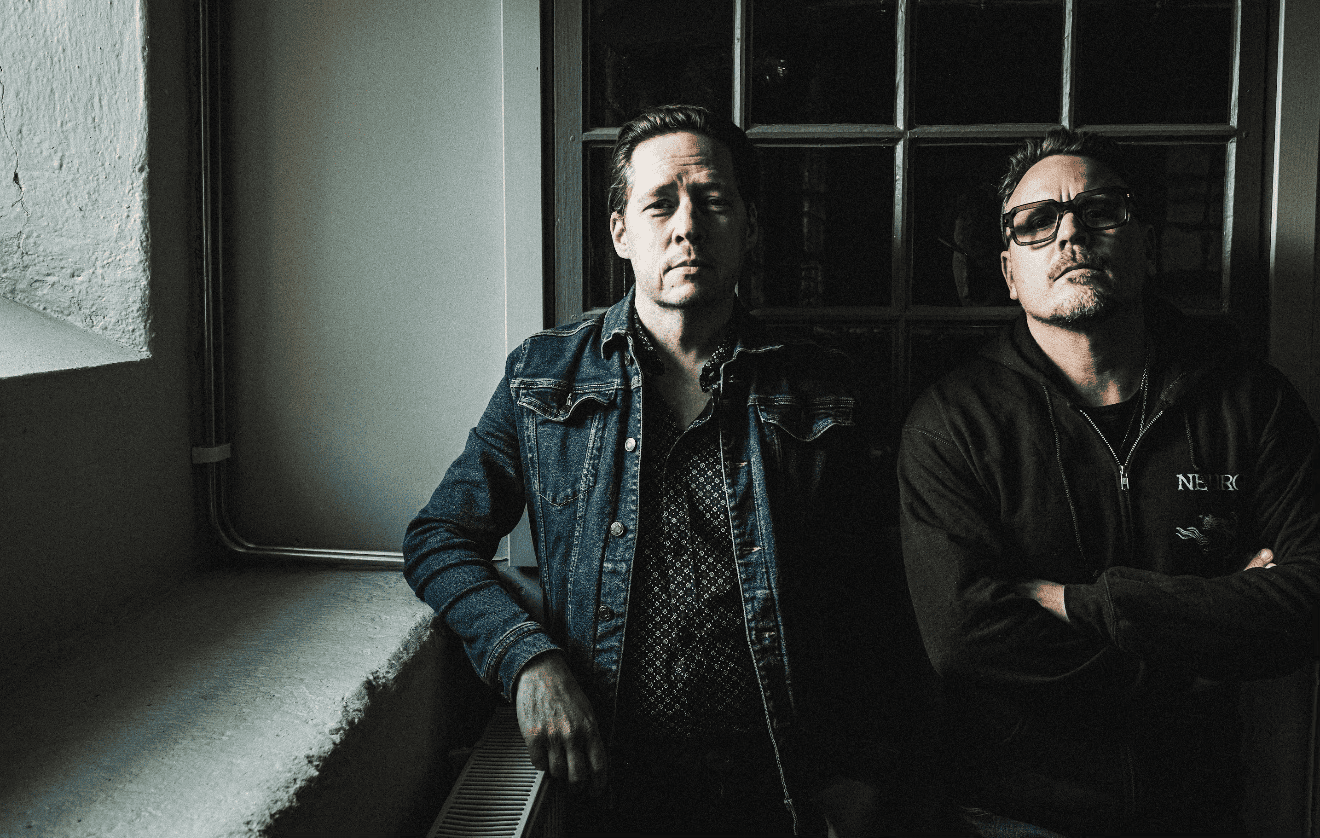
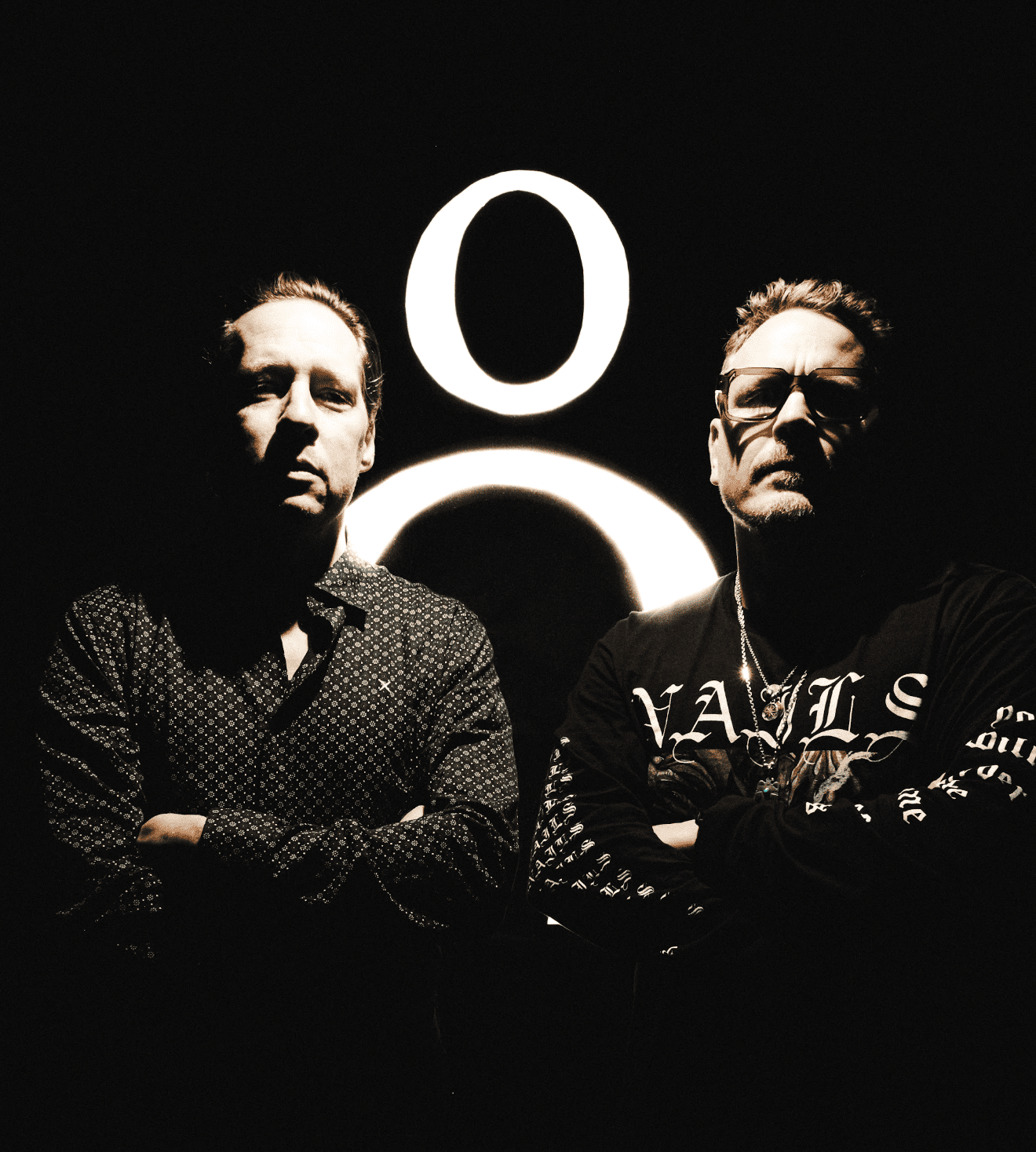
åhm are a two-piece act hailing from Linköping, Sweden. Comprised of Cribbe Eriksson and Anders Tengdahl, the pair released their debut EP THORNS in 2024 and have since delivered a constant stream of alternative rock gems.
The Mechanics of Falling Apart is the duo's new offering, a six-track EP they unleashed on the world just a few hours ago. Heavy, uncompromising, and laced with a dark undercurrent, it's truly one of the best EPs I've heard all year.
Keen to get to know Cribbe and Anders a bit better, I reached out to see whether they'd be up for an interview. Thankfully, they were only too happy to oblige.
Chatting about the early days as Iguana Machinery, their mutual love for bands like Soundgarden, Alice in Chains and Deftones, and the endless musical territory they're still uncovering together, please welcome Cribbe and Anders of åhm!
Cribb, Anders, it's such a pleasure to chat with you both! Thanks so much for taking the time!
Before we dive into the music, how did the two of you cross paths, and how did the collaboration actually start?
Our paths first crossed in the Linköping music scene many years ago. We played together in Iguana Machinery around 2001, although that project only played one show. Cribbe remembered Anders as a really strong bass player.
We reconnected musically in 2023 through a project called Interlace in Lund, which needed a bassist. That brought us back into the same room, and eventually the two of us carried the music forward together.
There was a lot of shared musical history, but we also found that we now work well together. We could follow an idea without having to explain every detail first. åhm grew out of that connection.
Which would you rather:
Headline a massive festival main stage, or have one of your songs featured in a blockbuster movie?
A festival main stage, probably. There’s something difficult to beat about playing in a room—or a field—with people who are responding to what you’re doing in real time. So much of our music comes from our interactions, so sharing it with a crowd would mean a lot.
That said, hearing one of our songs in a film, in a scene where it really belongs, would be pretty surreal. We’d want to know what the film was before signing away our festival slot!
Let's get stuck into The Mechanics of Falling Apart, your potent new EP now out in the world!
Having been fortunate enough to get an early listen, I knew immediately that it was something special.
If someone is sitting alone and blasting the EP, what do you hope resonates with them the most?
Hopefully, a sense of recognition. The record deals with grief, loss and things that can be difficult to put into an ordinary conversation. If someone is alone with it and recognises something of their own experience, that would mean a great deal.
We’ve both found comfort in heavy, dark music. Sometimes hearing someone give a feeling its full weight makes it easier to sit with your own. There’s room for anger and vulnerability to exist together.
We’d like people to hear the human beings in the performances too—the changes in intensity, the breathing space, the moments where we push each other. Those things carry a lot of the emotion for us.
You've mentioned the likes of Deftones, Soundgarden, and Alice In Chains as being influential to your sound.
Who else played a formative role in your musical upbringing, and would you say that your tastes have changed over the years?
We come from slightly different musical backgrounds. Anders is a huge Beatles fan, and Radiohead and Motorpsycho have also been important to him. Cribbe comes more from the hardcore scene, with bands like Unbroken and Earth Crisis, alongside his love of Nirvana. In Utero remains a big reference point for the rawness of the performances and the physical sound of the drums. Neurosis, particularly A Sun That Never Sets, has also had a strong influence on how he thinks about weight, patience and dynamics.
Soundgarden, Alice in Chains and Deftones are part of our shared musical ground, but our listening goes well beyond that. Anders is completely hooked on Lana Del Rey at the moment, so it’s certainly not all heavy riffs!
Our tastes have broadened over the years, while those early favourites have stayed with us. We probably listen differently now, too—paying more attention to a melody, the space in an arrangement or the feeling in a voice. Those things can draw us in regardless of genre, and having different influences gives us more to work with when we get together.
When a new song starts to form, what’s your usual approach? Can you talk us through how you develop that initial spark into a fully realised piece of music?
Anders usually brings the first idea, often as a demo with a guitar part and a sense of where the song might go. Cribbe then works on the drums and arrangement: where to hold back, where the weight should arrive, and whether a section needs more time or has already said enough.
We live about 300 kilometres apart, so some of that work happens separately. Getting into the same room is where we find out what really works. A demo can suggest one thing, then the way we play together takes it somewhere else.
We record drums and guitars together without a click. That allows us to react to each other and lets the tempo move naturally with the performance. We’re listening for a take that feels convincing, and sometimes the small imperfections are part of why it does.
What, to you, is music’s role in society?
Music gives people a way to express things they might struggle to say directly. It can help someone process grief, give anger a direction, or simply make a difficult day more bearable. Those are meaningful things, even when they happen quietly and privately.
It also brings people together who might otherwise never meet. We both came through local music scenes, and those places give you friendships, a sense of belonging and somewhere to put your energy.
There’s value in making something together and listening to each other. Music creates opportunities for that, whether it’s two people rehearsing or a whole audience singing the same line.
What would “being successful” in the music industry look like for åhm? And, do you see it as an imperative or more of a cherry on top?
Success would mean being able to keep making records we believe in, reaching people who genuinely connect with them, and building enough support to keep going without exhausting ourselves financially or personally.
We’d like the music to travel further. Good shows, listeners coming back for the next release, and relationships with people who understand what we do would all matter. We’re ambitious about the music, even if our idea of success doesn’t depend on becoming a huge band.
The urge to make it is already there. Wider recognition would give us more opportunities, but a message from someone who has spent time with the record can make it feel worthwhile long before any big milestone arrives.
Cribb, Anders, thank you so much again for taking the time to chat with us!
Before we say farewell, what comes next for you musically and, I guess, in a broader sense, what do you hope your musical future has in store?
We’re heading back into the studio in November to begin recording our next album. It’s a good feeling to have new music taking shape while The Mechanics of Falling Apart is reaching people.
We want to keep developing the interplay between us and see how far we can take the dynamics and atmosphere. Working as a duo leaves a lot exposed, which makes the choices we make—and the space we leave—important.
Further ahead, we hope to make more records, find the right live opportunities and build lasting connections with listeners and people we enjoy working with. We’ve known each other for a long time, but there’s still plenty left for us to discover musically.
Follow åhm on Instagram
