
Finlay Birch: “If someone tells me a song helped them through something or became part of their life in some way, that means far more to me than any statistic”
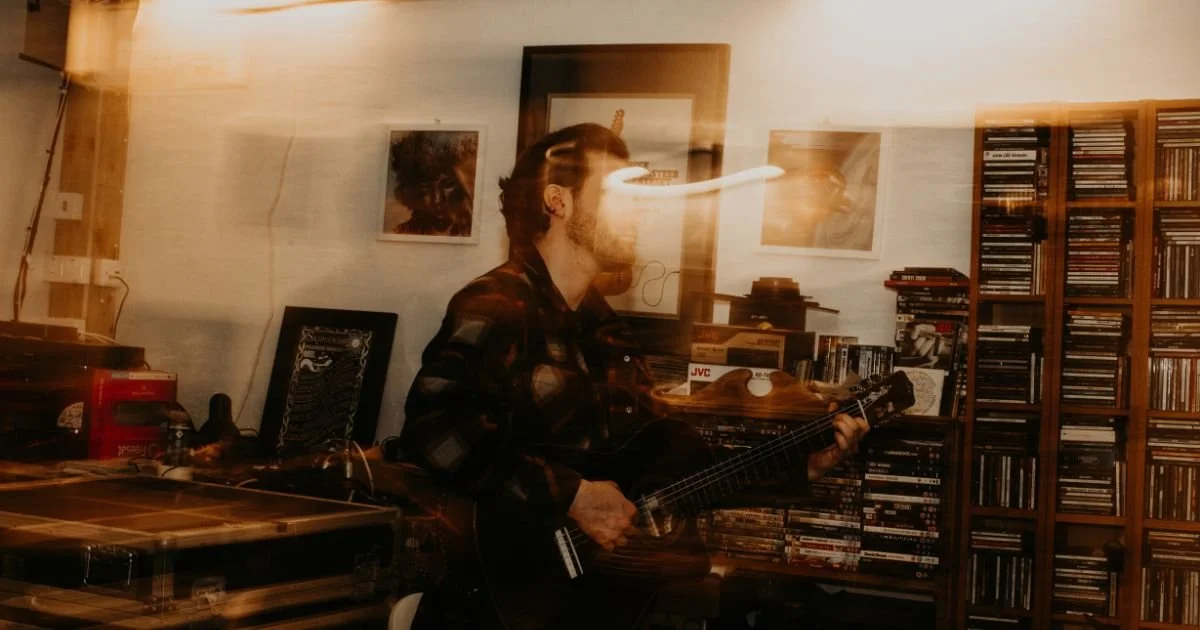
Finlay Birch is a Scottish singer/songwriter who recently delivered his debut album, which took nearly a decade to complete. Titled Weight Will Unwind, the ten-track offering of indie folk gems is one I haven't quite been able to get over. It's not just me, though - all three singles from the record have received national airplay and been championed by BBC's Roddy Hart!
Intrigued to find out more about the man behind the music, I reached out to Finlay, hoping he'd be up for an interview. Thankfully, he was more than happy to oblige!
Going in-depth about his latest album, why he's drawn to records that reveal more with each listen, and what he loves most about being a musician, please give a warm welcome to our new friend Finlay Birch!
Hey Finlay, I'm really excited to get to know you better and introduce you to our ever-growing audience!
Now, for the unfortunate souls who haven't stumbled across your music yet, what are they missing out on? How would you describe your sound?
I’d describe my sound as somewhere between indie folk and alternative rock, rooted in storytelling and a sense of place. A lot of my songs are quite intimate and reflective, but they build into bigger, more expansive moments. Living on the Isle of Mull has definitely shaped the atmosphere of the music, even when the songs themselves aren’t directly about the landscape.
If people haven't come across my work yet, I hope they'll find songs that feel honest and human, records that sit with themes of memory, release and trying to make sense of things. There are influences from artists like Bon Iver, Ben Howard and Frightened Rabbit, but ultimately I’m interested in making music that feels timeless and emotionally genuine.
The more time I spend with Weight Will Unwind, the more it feels like one of those records destined to stay with me for many years to come.
When people sit with it long enough, what do you hope it leaves them feeling?
I think I’d be happy if people simply felt a little lighter after spending time with it. Weight Will Unwind came from nearly a decade of writing, and a lot of those songs were born out of trying to understand things I couldn’t quite put into words at the time.
I hope the record reminds people that they’re not alone in carrying things, and that there’s value in sitting with emotions rather than rushing past them. If someone returns to the album years from now and finds comfort, recognition, or even just a sense of peace in it, that would mean a great deal to me.
Please tell us about Inverclyde and the Isle of Mull 😊 Both look like rather picturesque places, and I'm wondering if the landscapes around you influence your creative headspace at all?
They’re both beautiful places, but in very different ways. I grew up in Inverclyde on Scotland’s west coast, so the Clyde, the hills and the sense of being close to the sea have always felt very normal to me. There’s something quite honest about the place, and I think that groundedness has stayed with me. A lot of my earliest songs were written there, and I still feel very connected to it.
The Isle of Mull has had a different influence. Living here has taught me to slow down and pay attention. There’s more space, more quiet and a stronger awareness of the seasons and the weather. I don’t often write songs directly about landscapes, but I think places seep into music in subtler ways — through atmosphere, pacing and the way you experience time.
So, while you won’t necessarily hear songs about mountains or beaches, I think both Inverclyde and Mull are woven through everything I write. One gave me my roots, and the other has given me the space to reflect on them.
Who would you say some of your biggest musical influences are, and who would I see under “Recently Played” on your streaming service of choice?
I think some of the artists who have stayed with me the longest are Bon Iver, Ben Howard, Frightened Rabbit and Damien Rice. I love songwriters who can make something feel both intimate and expansive, and I’m always drawn to records that reveal more with each listen. There’s definitely a thread of Scottish songwriting running through a lot of what I love too.
As for my “Recently Played”, it’s usually a bit all over the place. Lately, there’s been quite a lot of Bon Iver, Sam Fender, Big Thief, Mac DeMarco and Sufjan Stevens. I’ve also been revisiting Frightened Rabbit records recently; they’re one of those bands I always seem to come back to. And because I’m a bit obsessed with discovering new music, there are usually a handful of artists with only a few hundred listeners mixed in there as well.
Obviously, everyone defines success differently, so when you think about your own path in music, what would "being successful" in the industry really mean to you?
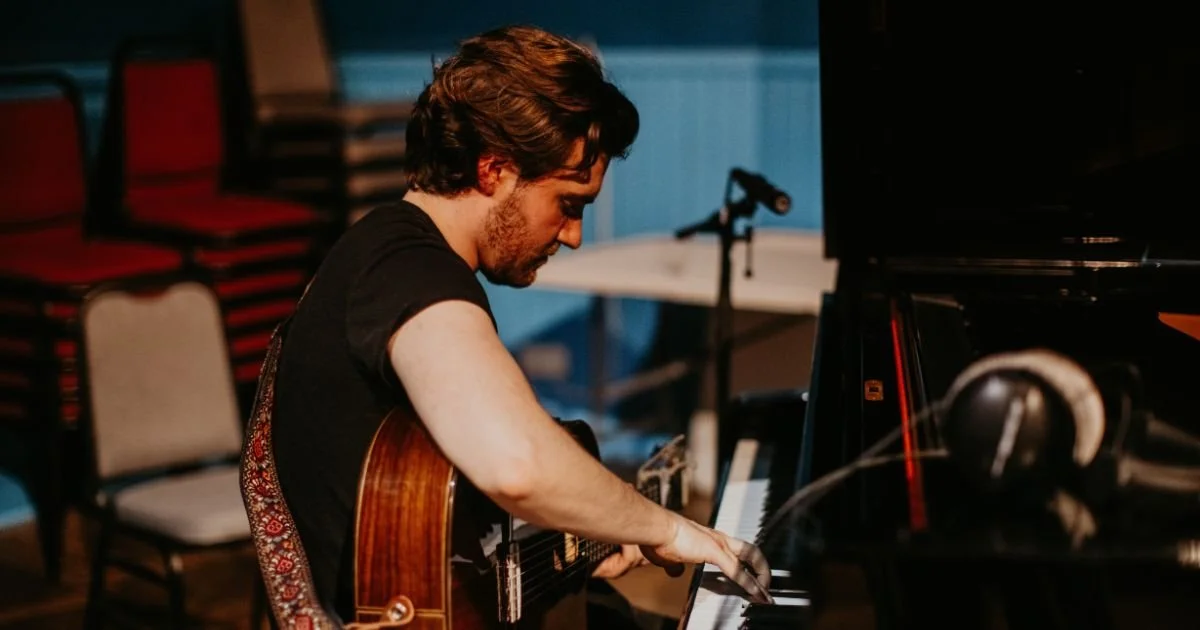
I think success has changed meaning for me over the years. When I was younger, I probably imagined it in terms of numbers or recognition, but now it’s much simpler. Success to me would be being able to continue making records I’m proud of, collaborating with good people and building a sustainable life around music without losing sight of why I started writing songs in the first place.
I don't necessarily dream of stadiums or chart positions. I'd love to make albums for a long time, play meaningful shows and know that the music has genuinely connected with people. If someone tells me a song helped them through something or became part of their life in some way, that means far more to me than any statistic.
I think the dream is longevity rather than a moment. To still be making music ten, twenty or thirty years from now, hopefully from the Isle of Mull, and to keep finding new things to say and new ways of saying them. If I can do that, I'd consider myself incredibly fortunate.
We’re always intrigued by the different approaches that bands and artists turn to in their creative process.
Can you tell our readers a bit about yours? How do you take an idea and turn it into a complete song?
My process is usually quite simple. I nearly always start with an acoustic guitar and try to find a chord progression or rhythm that feels interesting. Once I have that foundation, I tend to sing nonsense melodies over the top until a topline begins to emerge. For me, melody comes before words.
Only once I know how the song wants to feel do I start writing lyrics. I find that the emotion and phrasing are often already hidden in the melody, and the words are really about uncovering what the song is trying to say.
Some songs come together quickly, while others take years. I don't like forcing ideas, so I'm happy to leave something unfinished until the right lyric or melody arrives. Most of the songs on Weight Will Unwind went through several lives before reaching their final form.
I think of songwriting as a process of discovery rather than construction. I'm not trying to fit pieces together as much as I'm trying to listen to where the song wants to go and follow it.
What do you love most about being a musician? And on the flip side, what are some of the biggest challenges that you’ve faced so far?
What I love most is the feeling of making something that didn't exist before and then discovering that it means something to other people too. Songwriting can be quite a solitary thing, so there's something really special about releasing music and hearing that someone has connected with a lyric or made a song part of their own story. I also love the collaborative side of music and working with people I trust and admire.
On the flip side, one of the biggest challenges has simply been patience. Weight Will Unwind took nearly a decade to come together, and it's easy to compare yourself to other artists or feel like you're moving too slowly. Learning to trust my own timeline has probably been one of the hardest lessons.
Like most independent musicians, there's also the reality that you wear a lot of hats. One day you're writing songs, the next you're making videos, sending emails, designing artwork or trying to understand algorithms. It can be overwhelming at times, but I think those challenges make you appreciate the moments when the music itself cuts through and reminds you why you started.
Ultimately, I still feel incredibly lucky that I get to do this at all. If I can keep making honest records and sharing them with people, that's the part I love most.
Finlay, thank you so much for taking the time to chat with us! It's been a treat having you here!
Before we say farewell, what comes next for you musically and, I guess, in a broader sense, what do you hope your musical future has in store?
Thank you for having me! It's been lovely to chat.
In the immediate future, I'm hoping to give Weight Will Unwind a life beyond its release, playing more shows, reaching new listeners and allowing the songs to find their own path. After spending nearly a decade writing and recording the album, I feel like it's only just beginning its journey.
I'm also excited to start looking towards whatever comes next. There are already new songs taking shape, and I'd love to continue working with producer and close friend Dylan Cooper. Every record teaches you something, and I feel like I'm only just beginning to understand the kind of artist I want to be.
Looking further ahead, I'd love to find a home on an independent label. I've always admired labels that nurture artists over the long term and build communities around music they genuinely believe in. The idea of being part of something like that really appeals to me.
More broadly, I hope my future in music is built on longevity rather than speed. I don't necessarily have dreams of world domination, I'd just love to keep making records, collaborating with inspiring people and continuing to write from wherever life takes me, hopefully still from the Isle of Mull. If I can still be releasing music and connecting with listeners decades from now, I'd consider that a pretty wonderful life.
Follow Finlay Birch on Instagram
