
Roy Souaid of John Lebanon: “I do not think you ever fully get used to the idea that something you make in a very personal space ends up reaching people you will probably never meet”
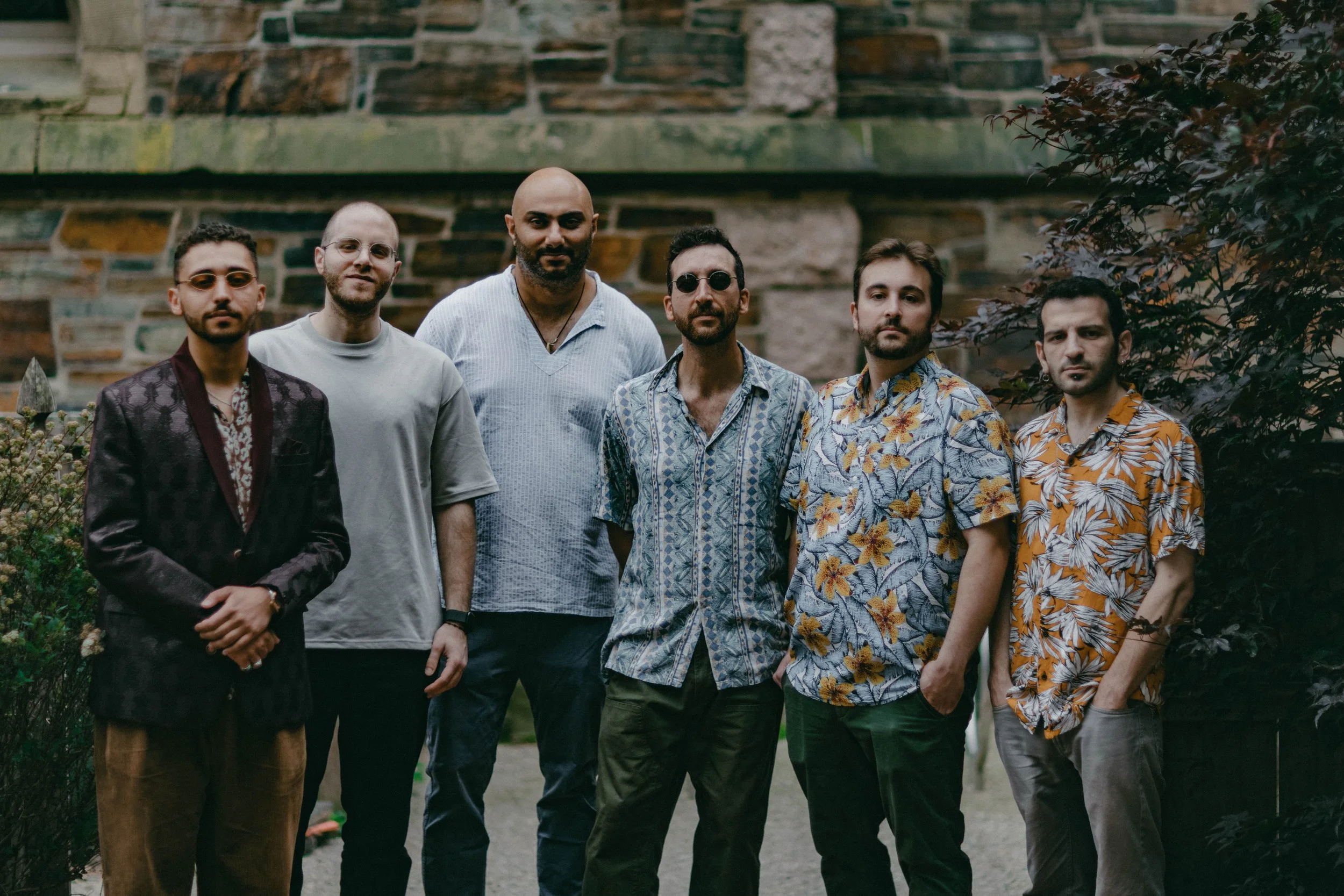
John Lebanon is a Boston-based indie folk outfit originally born in the underground scenes of Beirut, Lebanon. Described as a project that "captures the tension of living under foreign skies," John Lebanon's music looks honestly at the search for a sense of place.
Earlier this month, the group delivered Kite without a string, an album written over several years and locations. An eight-track offering, the blend of warm folk melodies, textured indie rock, and subtle Middle Eastern influences won me over from the very first listen.
Getting the sense that there was a band with an interesting story to tell, I reached out to John Lebanon to see if one of its members would be up for an interview. And, I'm happy to report, guitarist and vocalist Roy Souaid said yes!
Chatting about the themes that Kite without a string explores, why he loves playing to a live audience, and what the act plans on getting up to next, please welcome our new friend Roy Souaid of John Lebanon!
Hi Roy, it's such a pleasure to have you here - thanks so much for taking the time!
Before we get stuck in, I'd love to ask you about your musical journey so far. What sparked your passion for it?
It probably started with my older cousin. I remember watching him play guitar and thinking it was the coolest thing I had ever seen. Not long after, I got a guitar of my own and carried it everywhere through school. That slowly turned into writing songs, recording demos, starting bands, and spending countless hours experimenting with music. One thing just kept leading to another.
John Lebanon released a tune last year called Providence is Divine, and it's one that's clearly resonated with listeners (any myself!)
As it nears 60,000 plays on Spotify, I'm wondering if you could tell us how it feels to know that so many people are listening to and relating with your music?
It feels really special. I do not think you ever fully get used to the idea that something you make in a very personal space ends up reaching people you will probably never meet. It is just really meaningful to know it has connected with people.
OK, let's get down to Kite Without a String, an album that, please correct me if I'm wrong, serves as your debut full-length offering.
I was fortunate enough to get an early preview of the record, and it's truly one of the most multi-layered, authentic, and moving albums I've heard this year.
When people sit with it long enough, what do you hope it leaves them feeling?
I think the hope is that people sit with it and feel a sense of grounding. The record moves through uncertainty, identity, and searching for balance, but it’s really focused on small, human moments rather than big statements.
If someone spends time with it and comes away feeling a bit more connected or steady in themselves, or in the people and places around them, then that would mean a lot to me.
I’ve always thought musicians kind of absorb everything they love - part fan, part sponge, if you will.
Who would you say has influenced your style the most, and who would I see under “Recently Played” on your streaming service of choice?
I would say a mix of things. Dire Straits and Toto have definitely been big influences for me, especially in terms of songwriting and how clean and intentional everything feels. I also tend to discover older records and get really into them for a while, and they naturally shape how I think about arrangement and sound.
Recently, it has been pretty random. I have been listening to a lot of different things depending on the moment, including Atlantic City by Bruce Springsteen, which I only discovered a few months ago and really got hooked on. It is one of those songs I keep coming back to.
What aspects of being a musician do you cherish most? And on the flip side, what would you say have been some of the biggest challenges you’ve encountered?
I really cherish playing live. It is where the songs can shift and evolve, and you get to reinterpret them depending on the room and the energy. It keeps everything alive for me in a way that recordings alone cannot.
The challenges are mostly practical. Writing comes naturally, and workshopping ideas is something I enjoy, but production can sometimes be difficult in terms of getting the final result as close as possible to the original vision.
The other part is simply time and momentum, whether that is rehearsing enough or getting everything aligned to bring the music to life on stage. At the end of the day, the goal is always to connect with people in a real way.
If you walked on stage one night and everyone in the crowd was wearing a T-shirt with one of your lyrics on it, which line or lines would you love to see?
Haha, I am not sure I have just one, but a few come to mind.
"You belong to no one" from Kite without a string is one of them. I also like the more playful "Nobody makes calzones like me" from Providence is Divine.
Then "His magic was too strong" from Blue Magic Bear, and "If I was a soldier, I’d lay my gun down" also from Kite without a string. I think each of them sits in a slightly different emotional space, whether more personal, playful, or reflective.
Have you ever listened back to a track of yours and realised it revealed more about you than you intended at the time?
Maybe a bit, but that is kind of what art is. You are sharing a part of yourself, even if you are not always fully aware of every layer in the moment.
Roy, thank you again for taking the time to chat with us!
Before we say farewell for now, what is next on John Lebanon's sonic horizon, and do you have any words of wisdom you'd like to leave us with?
As for what’s next, the plan is to get the record out into the world, enjoy the summer, play a few more shows through the fall, and work on a couple of new releases that lean a bit more into an indie rock direction. Thanks for having me!
Follow John Lebanon on Instagram
