
Garbage Garden: “The songs I’ve released so far aren't products of sudden inspiration; they are "dormant content" I’ve kept buried in my heart for a very long time, finally finding their way out”
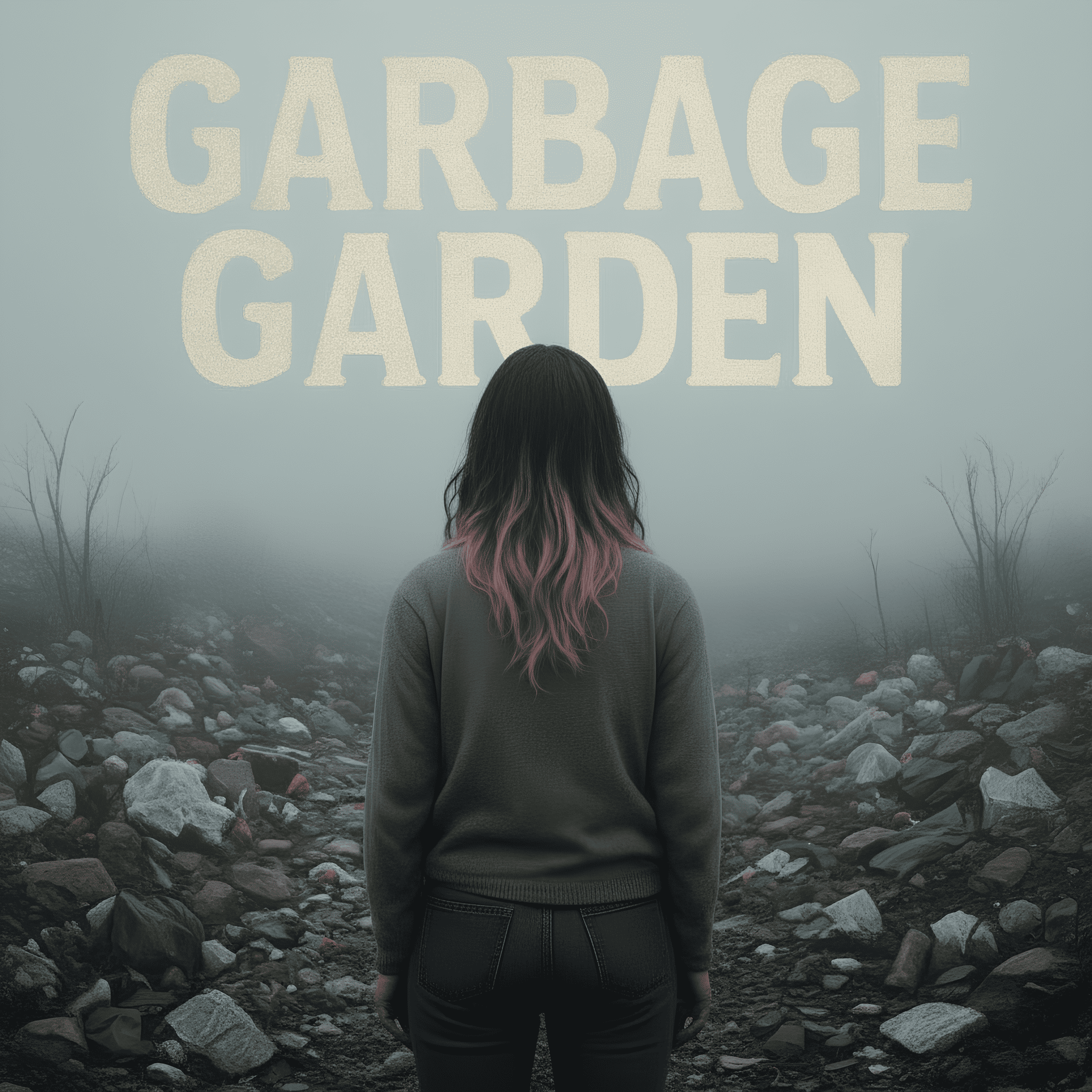
We know very little about the brains behind Garbage Garden, other than they’re based in Japan - and content, it seems, to keep the focus firmly on the music rather than the maker. Truth be told, that suits us just fine!
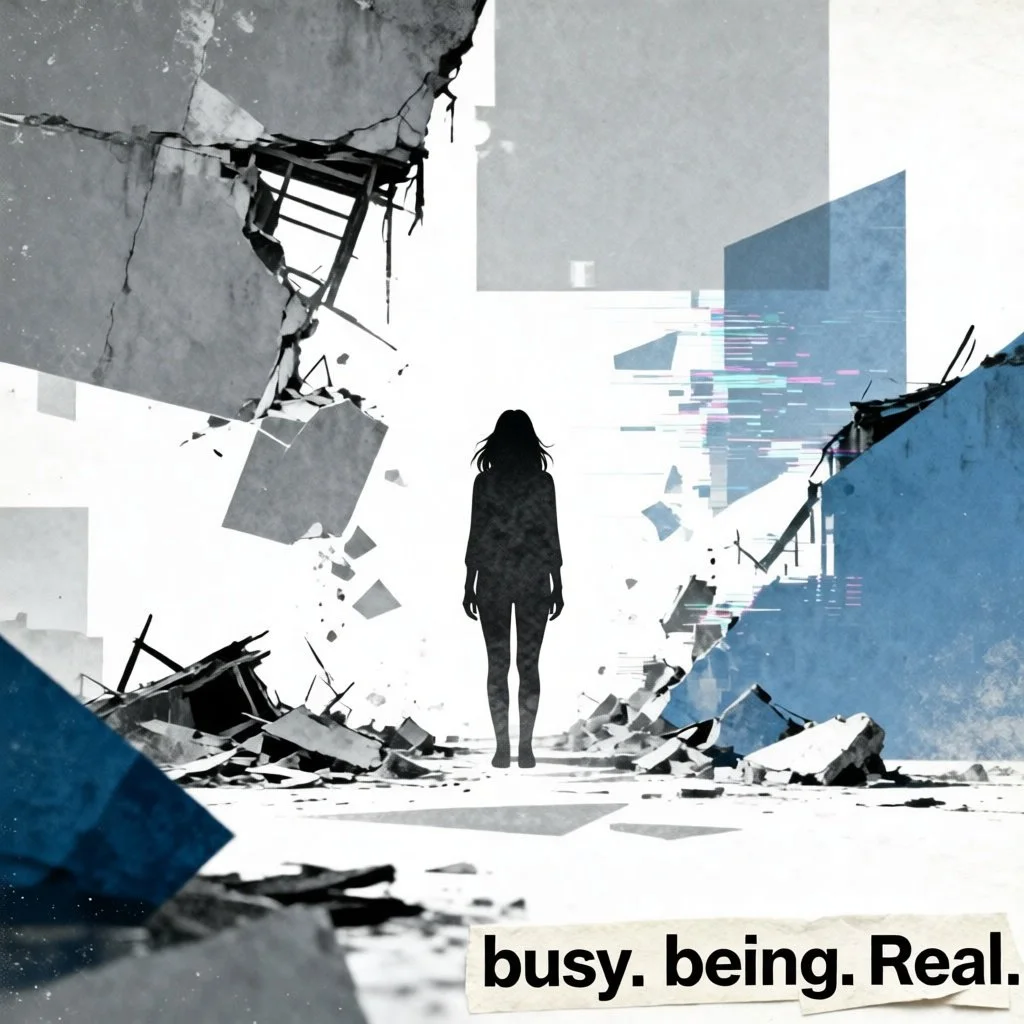
Having recently discovered the artist's hard-hitting and genre-blurring single busy. being. Real., I soon found myself venturing further into their discography. The result? A rabbit hole of bold ideas and relentless experimentation.
Intrigued to learn more about the musician, I was stoked when they agreed to an interview.
Chatting about the beauty of not fitting in, their love for the legendary South Korean artist Seo Taiji, and why finding one's own "Open Sea" can lead to freedom, please welcome our new friend Garbage Garden!
Garbage Garden! Welcome aboard! I'm super excited to introduce you to our ever-growing audience!
Now, I know you like to keep the identity side of things a little mysterious, but I'm fascinated by the name - how did Garbage Garden come about?
The name actually traces back to the very first track that defined this entire journey.
To me, "Garbage Garden" is a philosophical sanctuary. In a world obsessed with hyper-efficiency and constant "invoicing," anything that doesn't fit the rigid metrics of the system is often discarded as "garbage"—valueless and invisible.
But I found a strange, quiet freedom in that discarded space. The moment the system deems you "unfit" and throws you out, you’re finally free from its gravity. I wanted to reclaim that void and cultivate it into a vibrant, self-sustaining "Garden."
It’s about building your own identity and finding your own "Real" in the very place where the world thinks nothing of value exists. So, while the creator stays in the shadows, the "Garden" is where the stories—the ones that refuse to be lost—are grown.
Since the release of your debut single last year, you've steadily built a catalogue that now stretches to fourteen singles.
If someone were discovering Garbage Garden for the first time, which one would you point them to and why?
I would point them directly to my very first release, the self-titled track Garbage Garden. It is the manifesto and the DNA of everything I do. The song starts from the moment a rigid system stamps you with a number, deems you "surplus," and throws you away because you don’t fit their "spotless catalog." But the core of this track—and my entire project—is the realization that their rejection is actually the birth of true freedom.
As the lyrics say, it’s about shaking hands with the version of yourself that they "couldn't invoice." I wanted to show that even in a place the world calls a "landfill," something glorious can bloom—fertilized by the very things society rejected. If you listen to this track, you’ll understand the "glitch in the code" that I am, and why I chose to build a sanctuary in the shadows instead of trying to fix a "crooked frame" to fit their standards. It’s the starting point of my journey toward becoming "name[I]ess." and free.
I need to talk to you about busy. being. Real.!
As my introduction to your sound, I had no idea what to expect. What I uncovered, however, was one of the most inventive and genre-blurring tunes I've heard in ages!
What was the creative spark behind the song, and how did you approach building something so sonically adventurous?
Truth be told, I’m not a traditionally trained musician; I’m more of a lifelong, "omnivorous" listener. Growing up in South Korea, I was naturally exposed to a culture that excels at mixing various genres—much like Bibimbap or the eclectic nature of K-POP. I’ve never been a purist. I’ve explored everything from modern metal and Anime songs to Vocaloid, 1960s Japanese Group Sounds (GS), Euro-pop, and even Italo Disco. I was even a huge fan of the K-POP boy group WANNA ONE.
This "listener’s perspective" is my greatest asset. Instead of following rigid music theory, I focus on what sounds "interesting" or "fresh" to me. My 25-year career in the game industry—5 years as a designer and 20 as a professional translator—has also shaped my ear for immersive, glitchy, and cinematic textures. For me, "genre-bending" isn't a complex experiment; it’s just the natural result of a curious listener trying to piece together a sonic puzzle from all those diverse influences.
Take us through some of your biggest musical influences.
And, just for fun, if you could pluck one song from history and add your name to it, which would it be?
If I have to speak about my roots, it all starts and ends with Seo Taiji. He is a legendary South Korean artist who fundamentally shaped my approach to music. What fascinated me most was his fearlessness in blending contrasting sounds—taking heavy metal, hip-hop, and rock, and fusing them into something entirely new and seamless. Seeing him challenge the "norm" with every album left a permanent mark on my creative DNA.
As for the song I’d love to pluck from history and add my name to, it would be Internet War by Seo Taiji.
To me, that track is a masterpiece of aggressive sound design and social commentary. It has that raw, industrial edge combined with a sharp, haunting melody that stays with you. Even decades later, its energy feels incredibly "Real" and ahead of its time. It’s exactly the kind of "cinematic tension" I strive for in my own work—that feeling of a high-definition frame capturing a chaotic world. If I could claim any piece of musical history as my own, it would definitely be that one.
Do you feel artists have a responsibility to comment on the times we’re living in, or is music’s role more personal and timeless? Or perhaps a bit of both?
I believe it’s a bit of both, but they aren't separate things. For me, the most personal stories are often the most "timeless" comments on the era.
I don’t set out with a grand mission to "change the world." However, as someone who has spent 20 years observing the "Lost Generation" in Japan through my partner and our social circle, those social cracks naturally seeped into my personal emotions. When I talk about the exhaustion of being "productive" in busy. being. Real., I’m sharing a very private struggle. But that struggle is a direct result of the times we live in—a world that treats efficiency like a religion.
So, I don't think an artist must force a social message. But if you are being truly "Real" with your own pain, displacement, or resilience, your music will inevitably reflect the era. My music is a mirror. I just hold up a high-definition frame to these "discarded" personal moments, and if the listener sees the reflection of our times in it, that’s where the connection happens.
When inspiration strikes, what’s the first thing you usually do to capture it?
Do you feel like you search for songs - or do they "find" you?
I would say I don’t go out searching for songs or specific musical references when I create. Instead, I focus entirely on the story I want to tell and how to translate that emotion into sound. For me, the songs I’ve released so far aren't products of sudden inspiration; they are "dormant content" I’ve kept buried in my heart for a very long time, finally finding their way out.
Take busy. being. Real. as an example. I didn't have to "study" or "research" to make it. The theme of Japan’s "Lost Generation" has been a part of my daily life for 20 years, ever since I met my partner, who belongs to that generation. Over two decades, I’ve read countless books and observed their reality up close. Through my own travels across various countries in my 20s and 30s, I realized that this displacement isn't just a Japanese issue—it’s a global one.
So, it’s not that a song "finds" me in a flash. Rather, these long-held social observations and personal inquiries eventually reach a boiling point and "strike" me as a moment of clarity. That’s when I know it’s time to write. I’m just giving a voice to the questions I’ve been asking for half my life.
If you walked on stage one night and everyone in the crowd was wearing a T-shirt with one of your lyrics on it, which line or lines would you love to see?
(Laughs) To be honest, as a very ordinary middle-aged woman standing behind the name "Garbage Garden," I don't think I’ll be walking onto a physical stage anytime soon. But if that impossible moment ever happened, there is only one line I would want to see on every single T-shirt in the crowd:
"I am not lost, they lost me."
That single line is the reason this project exists. It’s a declaration for anyone who has ever been labeled as "surplus," "unfit," or "worthless" by a rigid system. It’s not about us being broken; it’s about the system’s inability to recognize our value. Seeing a sea of people reclaiming their power through those words—acknowledging that they aren't the ones who are lost—would be the ultimate "Garden" blooming in full force.
Garbage Garden, thank you so much for taking the time to chat! It's been great getting to know you better.
Before we say farewell, what comes next for you musically, and do you have any words of wisdom you'd like to leave us with?
Musically, I’ll keep giving a voice to the "dormant stories" in my heart.
As for words of wisdom, I’ll share the core of my song name[I]ess.. Most people spend their whole lives trying to find the "right answer" defined by others, terrified of the red ink on their report cards. But at the end of life, I don't want to ask if I passed their test. I want to be entirely free from the evaluation itself.
My final thought is this: "No scoreboard, no lines, no grids, no frame." Don't waste your life trying to fit into someone else's tally sheet. Find your own "Open Sea" where there are no judges to please—only the freedom of being truly nameless and real.
Follow Garbage Garden on Instagram
