
C'batch: “What I'd like to see today is a music industry that's more willing to embrace originality instead of simply following established trends”
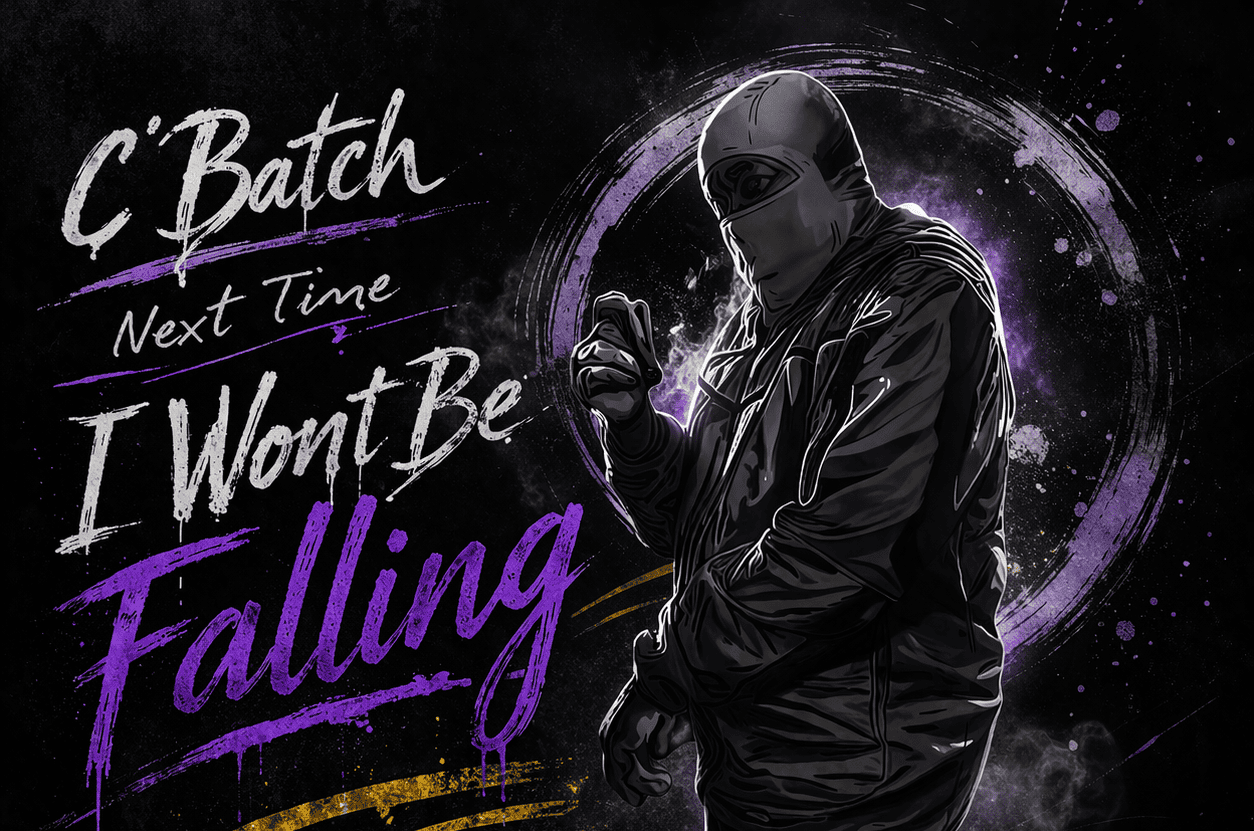
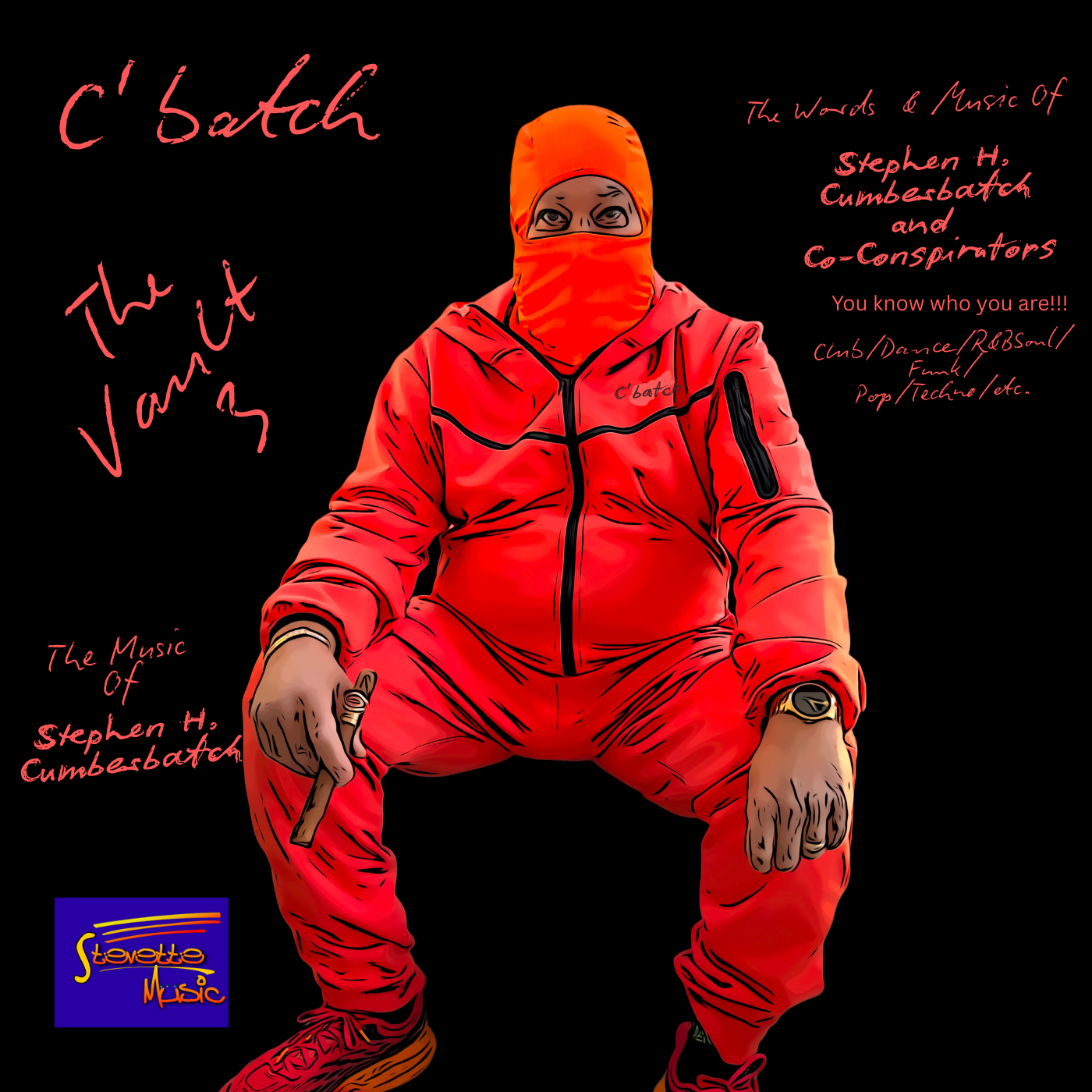
Hailing from White Plains, New York, C'batch is the sonic alias of Stephen H. Cumberbatch, a composer, author, producer, and multi-instrumentalist. Having first discovered his work via the silky smooth single Trapped, C'batch then returned with a sprawling twenty-track epic called The Vault 3 – Club/Dance/R&B-Soul/Funk/Pop/Techno/Etc., and from that point on, I was sold!
Keen to know more about the man behind the music, I reached out to Stephen, hoping he'd have some time to chat. Thankfully, he was only too happy to oblige.
Taking us through what it was like to grow up in a home where musical talent seemed the norm, why some of his biggest influences would probably surprise people, and what he'd like to see shift in the music industry, please welcome Stephen H. Cumberbatch, AKA C'batch!
Stephen, I'm so stoked to get to chat with you finally! As you know, I've been a firm fan of what you've been putting out!
Before we get stuck in, I'd love to ask you about your musical journey so far. What sparked your passion for it?
First of all, thank you for your support. It truly means a great deal to know that people enjoy the music I create. When someone connects with my work, it reminds me that all the years of effort have been worthwhile. Ultimately, that's why I do what I do—to leave behind something of lasting value that people can enjoy.
As for what sparked my passion for music, it began at a very early age. Music was always part of my life. My father was a jazz drummer, so I grew up surrounded by jazz, especially bebop. My grandmother would sit me down at the piano whenever I visited her, and my mother was also a trained singer.
If I had to point to one defining moment, though, it would be seeing The Beatles perform on The Ed Sullivan Show when they first came to America. Watching them inspired me to pursue music in my own way.
I'm still pretty deep into your latest album, The Vault 3, and I'm not seeing an exit anytime soon. It's just such a sprawling and inventive record; it really does reveal something new with each listen.
What was the vision behind the LP, and how closely did the final result match what you set out to create?
The vision behind The Vault 3 – Club/Dance/R&B-Soul/Funk/Pop/Techno/Etc. was for it to serve as a natural continuation of The Vault 2 – Soul/R&B/Pop/Rock/Reggae. While each album explores different styles, they share the same creative spirit and build upon one another.
Looking back, I believe the finished album accomplished exactly what I had hoped. It expanded on the musical ideas introduced in The Vault 2 while allowing me to explore an even broader range of influences and sounds.
I think it’s fair to say you’re a rather prolific musician. Do you feel like the entire “song-making process” comes very naturally to you?
Actually, I've never thought of myself as a particularly prolific songwriter. If anything, the creative process has often been a struggle. I've always been extremely critical of my own ideas, and many songs people are hearing today almost never saw the light of day because I kept shelving them instead of releasing them.
That's really how The Vault came to exist—years of recordings stored away in my garage on cassette and DAT tapes.
It may seem like I've suddenly become prolific, but the reality is that this music wasn't created overnight. These compositions were written and recorded over several decades and are only now being released to the public. In many ways, it's decades of creativity finally being shared all at once.
As I've mentioned before, I've really gotten into your music this year, and I've always wondered where it all comes from.
Who are some of your biggest influences, and who would I see under “Recently Played” on your streaming service of choice?
First and foremost, it comes from within. Every composition begins as an emotional or creative idea.
Physically, though, much of this music came from a real archive—a genuine "vault" filled with cassettes and DAT recordings that had been sitting in my garage for decades. Some of the more recent compositions were created digitally using my recording software, so these albums represent both my musical past and present coming together.
Some of my biggest influences would probably surprise people because many aren't household names. I've always admired extraordinary musicians whose impact was felt more by other musicians than by the general public. One of those was the late Allan Holdsworth, whom many guitarists regard as one of the most innovative players ever to pick up the instrument.
As for my "Recently Played," it would probably surprise people even more—it would be C'batch. I've finally learned to appreciate my own music. That's something that has only happened recently, and I'm now able to listen to it with fresh ears and genuinely enjoy what I've created.
German philosopher Friedrich Nietzsche said, “Without music, life would be a mistake."
What would your life look like without music, and what fills your days when you’re not busy creating?
Life without music would feel incredibly empty to me. Music adds color, emotion, and meaning to my life, and it's difficult to imagine my world without it.
These days, much of my time is devoted to promoting the music I've finally decided to release. It's become almost a full-time job.
Outside of music, I enjoy spending time with my family—my wife, children, grandchildren, and now my ten-month-old great-grandson, who has brought even more joy into our lives.
Do you feel artists have a responsibility to comment on the times we’re living in, or is music’s role more personal and timeless?
Most of my songs focus on love and relationships, although I have occasionally written about current events and the state of the world.
I do believe that artists who have the ability to thoughtfully express ideas about the times we live in have an opportunity—and perhaps even a responsibility—to do so. Music has always had the power to inspire, comfort, and encourage reflection.
In my own way, I tried to convey that spirit through my instrumental composition, Song For God, from The Vault 1. While it contains no lyrics, it was intended as a reminder of what I believe should come first in our lives.
One artist who embodied this exceptionally well was Bob Marley. He entertained people while delivering messages that continue to resonate decades later. So yes, I do believe artists have an important role to play when they have something meaningful to say.
What are your thoughts regarding the music industry of today? And, if you could, what changes would you make to it?
The music industry has always tended to follow trends, and while that's understandable from a commercial standpoint, it can sometimes discourage creativity and limit artistic growth.
One of my goals as a songwriter was to bring something different to R&B and soul music. At the time, I felt the genre had become somewhat predictable, so I wanted to introduce richer jazz harmonies alongside early European synthesizer influences.
If you listen to the original version of I Need You Now, you'll hear jazz-influenced chords woven into what was intended to be an R&B dance record, along with synthesizer textures that were quite uncommon when I recorded it in 1979. Had it been released then, it might have been among the earliest R&B dance records to incorporate synthesizers in that way.
The song features harmonies such as E11, Fmaj9, Cmaj7, Bbmaj7, Ebmaj7, D7sus resolving to Dm7, and D11—hardly a typical chord progression for dance music at the time. Much of that came from the jazz and jazz fusion music I was listening to then.
What I'd like to see today is a music industry that's more willing to embrace originality instead of simply following established trends. Encouraging artists who are willing to push musical boundaries ultimately benefits everyone, especially listeners.
Stephen, thank you so much for taking the time! I really appreciate it!
Before we say farewell, what comes next for you musically and, I guess, in a broader sense, what do you hope your musical future has in store?
First of all, thank you for your thoughtful questions, for taking such a genuine interest in my music, and for your continued support. I truly appreciate it, and I hope I've been able to give you a little insight into both my music and my passion for creating it.
Next, I'll be releasing The Vault 4 – Cinematic on July 10, 2026. That will likely be my final full-length album of the year, although I also plan to release an EP along with an animated music video for a cinematic composition titled Our Little Pooh Pea (The Last Light) on my birthday, August 29.
That piece is especially meaningful to me because it evolved from a guitar solo I originally played over another composition of mine, Round & Round. In many ways, it represents who I am as a musician and is one of the most personal pieces I've ever created.
After that, new releases may slow down somewhat because much of my remaining archive exists on cassette tapes that can only be played back using my old TASCAM 234 Syncaset four-track recorder, which is now in desperate need of repair.
Looking ahead, my biggest goal is to establish a foothold in sync licensing. I believe much of my catalog naturally lends itself to film, television, documentaries, and other visual media. Seeing these compositions find new life through storytelling would be an incredibly rewarding next chapter in my musical journey.
